About Me

A Life in Seven Stories

From family roots which date back to 1763 in Peć—seven chapters about faith, family, work, vision, new beginnings, humanitarian work, and the drive to keep building a legacy.

Portrait of Bogoljub J. Karić
Seven chapters. One life’s journey.

Where I came from, what I believe, and why I still look ahead.

This is more than a succession of business achievements. It is the story of a man shaped by his home town of Peć, his family and his faith—and of how he turned each new challenge into an opportunity to create something.

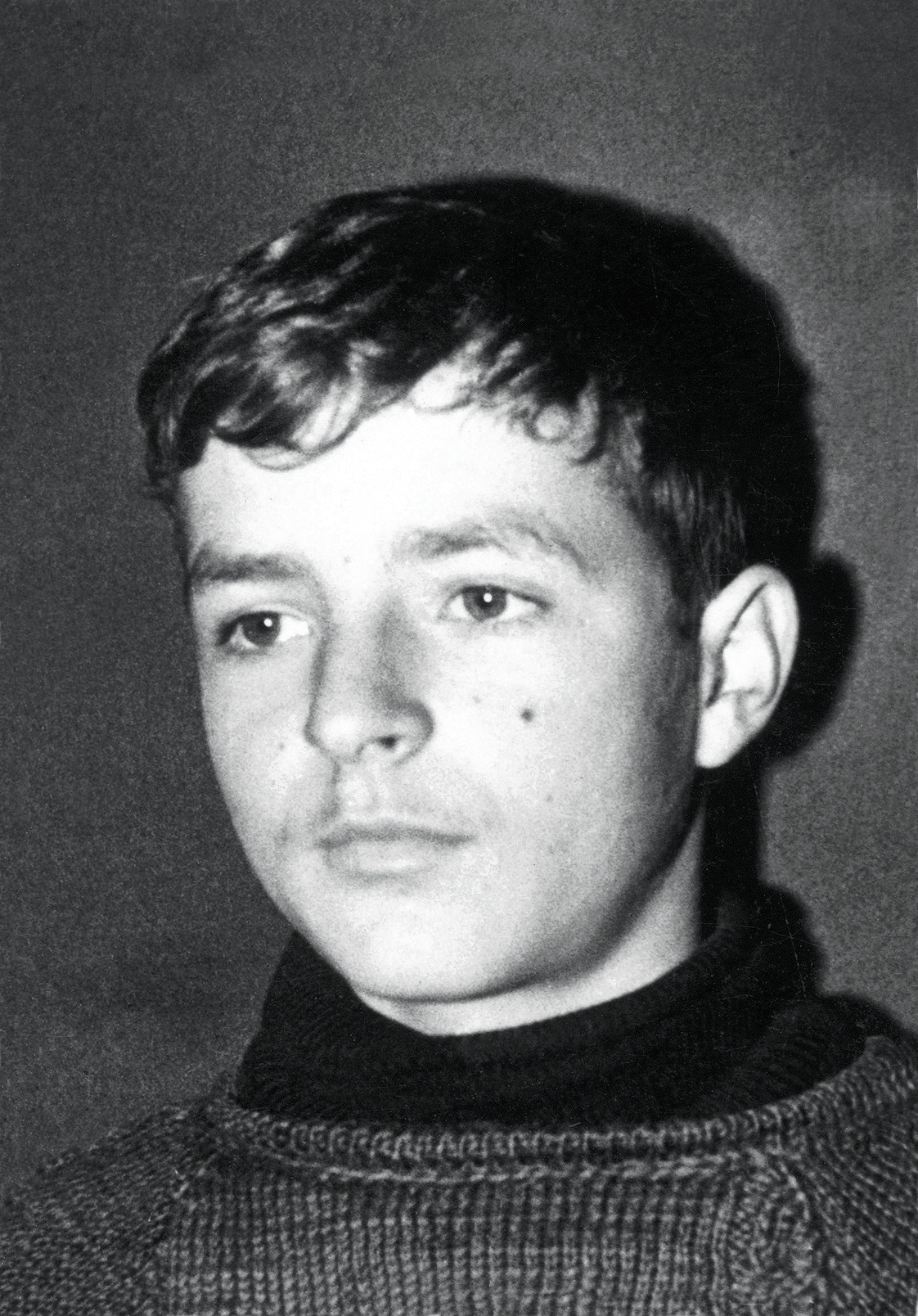
Bogoljub Karić in Peć during his teenage years
Bogoljub in Peć during his teenage years. Family archive.
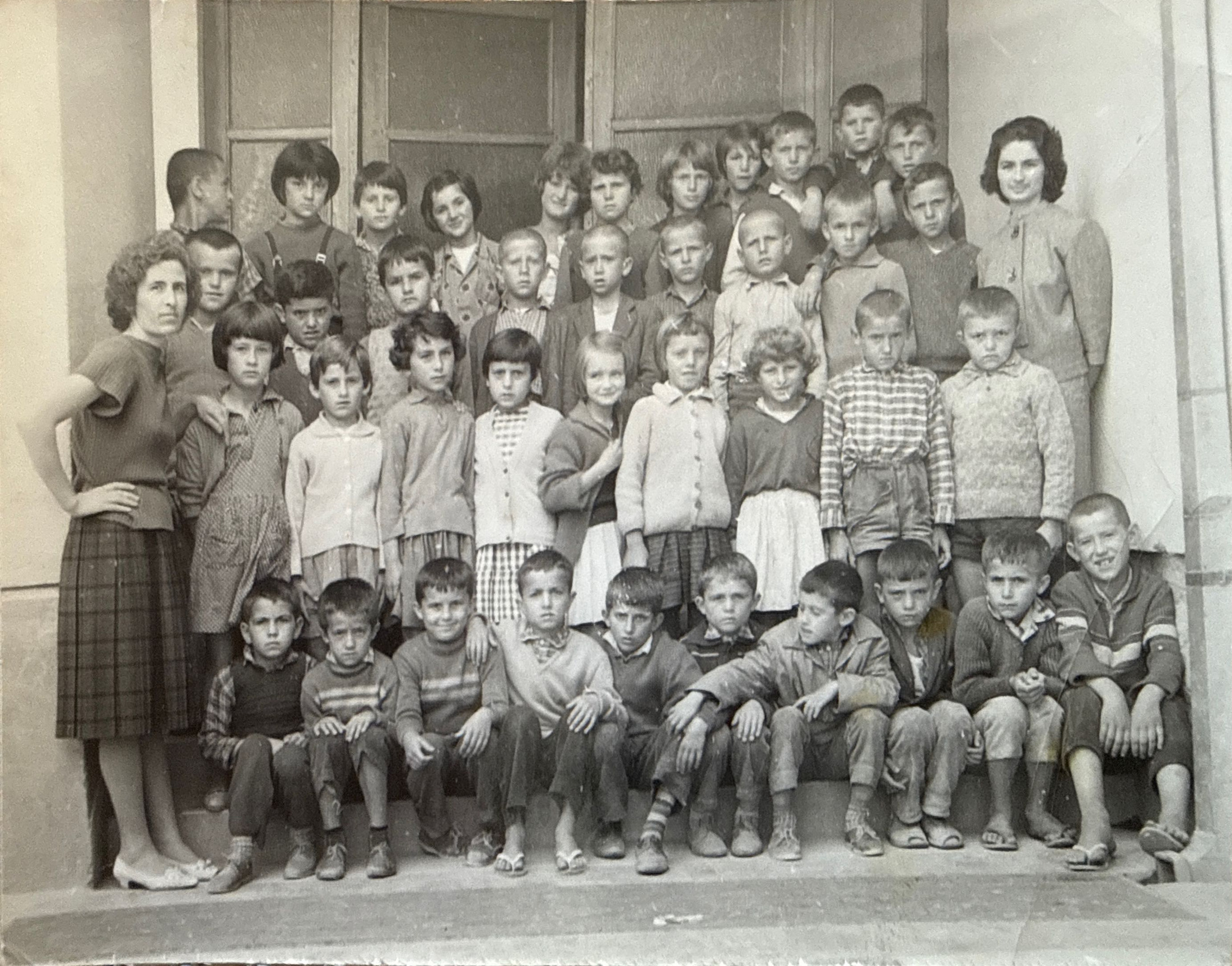
Clean scan of the school photograph from Peć, 1963 — click to enlarge
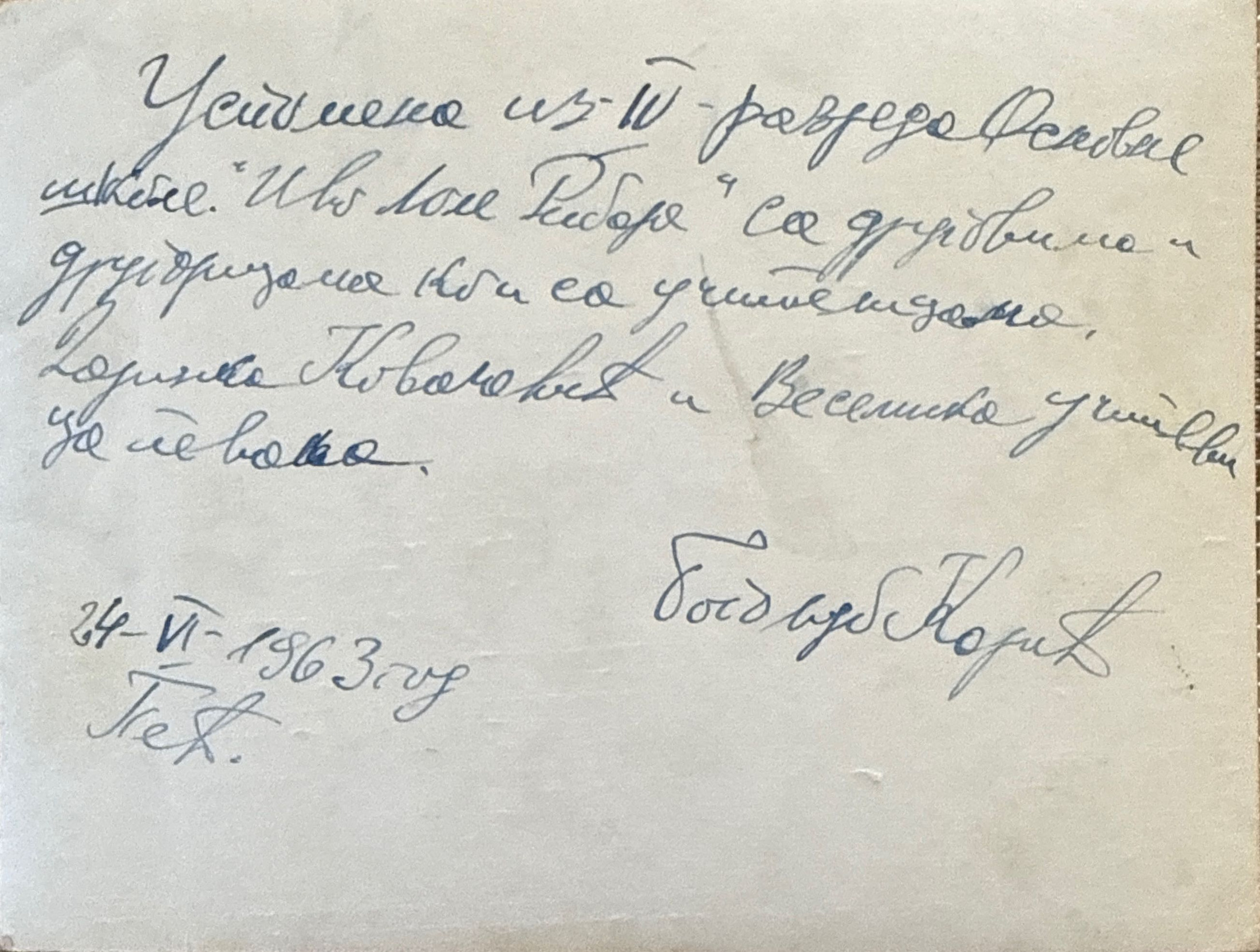
With school friends and teachers. Peć, 24 June 1963.
Scanned reverse of the school photograph, with handwritten details of the school, class, teachers and date — click to enlarge
The reverse preserves handwritten details of the school, class and teachers, together with the date and place. Click the scan to read the complete note.
01
The city where it all began

Peć

Before the major companies, television, and mobile telephony, there was Peć.

Bogoljub J. Karić was born in Peć on 17 January 1954 and grew up there. His family home, school, music, sport, and first jobs taught him the value of work and responsibility from an early age.

The Patriarchate of Peć held a special place in his upbringing. Together with his brothers and sister, he regularly sang in the church choir, growing up with faith, prayer, and a sense of belonging to a centuries-old spiritual tradition. The faith in God that he carried with him from Peć remained by his side through successes, losses, and new beginnings. He later passed it on to his children and grandchildren as one of the foundations of family life.

As he recalls, even before starting school he joined his brothers and neighbourhood children in selling soda water, orangeade, and a soft drink known as klaker from a wooden cart on the streets of Peć. When the cart once overturned and the bottles shattered on the cobblestones, the local soda maker deducted the loss from his day’s earnings. He did not write off the loss, believing that if he did, the same mistake would be repeated. Bogoljub remembers the episode as his first lesson in responsibility: you must look after what has been entrusted to you, and you do not make someone else pay for your mistake.

He remembers Peć as a community where neighbours of different faiths visited and respected one another, and where honesty and keeping one’s word mattered more than affiliation. In the home of Danica and Janićije Karić, the children learned not to wait for someone else to begin the work, to work together, and to keep their word.

He carried from Peć what would stay with him throughout his life: love of family, faith in God, faith in work, and the need to seek what unites people.

Peć · family coat of arms
1763
Roots that endure through generations.
Janićije, Danica, and Jefimija Karić in a family photograph
Family photograph: Janićije, Danica, and Jefimija Karić, 1965. Family archive.
02
The first school of trust

Family

Before he learned how to build a company, Bogoljub learned within his family how to build trust.

The family coat of arms bears the words “Peć, 1763”. The Karić family’s roots in Peć date back to that year. For Bogoljub, the emblem is not an ornament, but a reminder that every generation inherits a duty to preserve faith, unity, hard work, and one’s word.

Danica and Janićije raised five children on a single modest salary. Clothes and schoolbooks passed from the older children to the younger ones, and the children began working early to earn money for clothes, books, and pocket money. There were not many possessions, but there was a powerful sense that no one would ever be left alone.

Sreten, Dragomir, Zoran, Bogoljub, and Olivera shared household duties, music, and their first earnings. Later, they combined their different strengths—technical skill, organisation, contacts, and an instinct for the market—in a shared business. The success of one was inseparable from the strength of the family.

Bogoljub and Milanka started a family and had four children. As the children grew, she completed her studies, became involved in the family company’s legal affairs, and joined the other women of the family in establishing the Social Council to assist workers. The Karić Brothers Foundation later grew out of that tradition of family care.

The story of the Karić family is therefore not the story of one man who did everything alone. It is the story of people who knew how to combine different talents, share risk, and create together over many years.

For Bogoljub, family is not a decorative word. It is the first school of work, tolerance, forgiveness, and responsibility—and the place a person returns to when everything else changes shape.

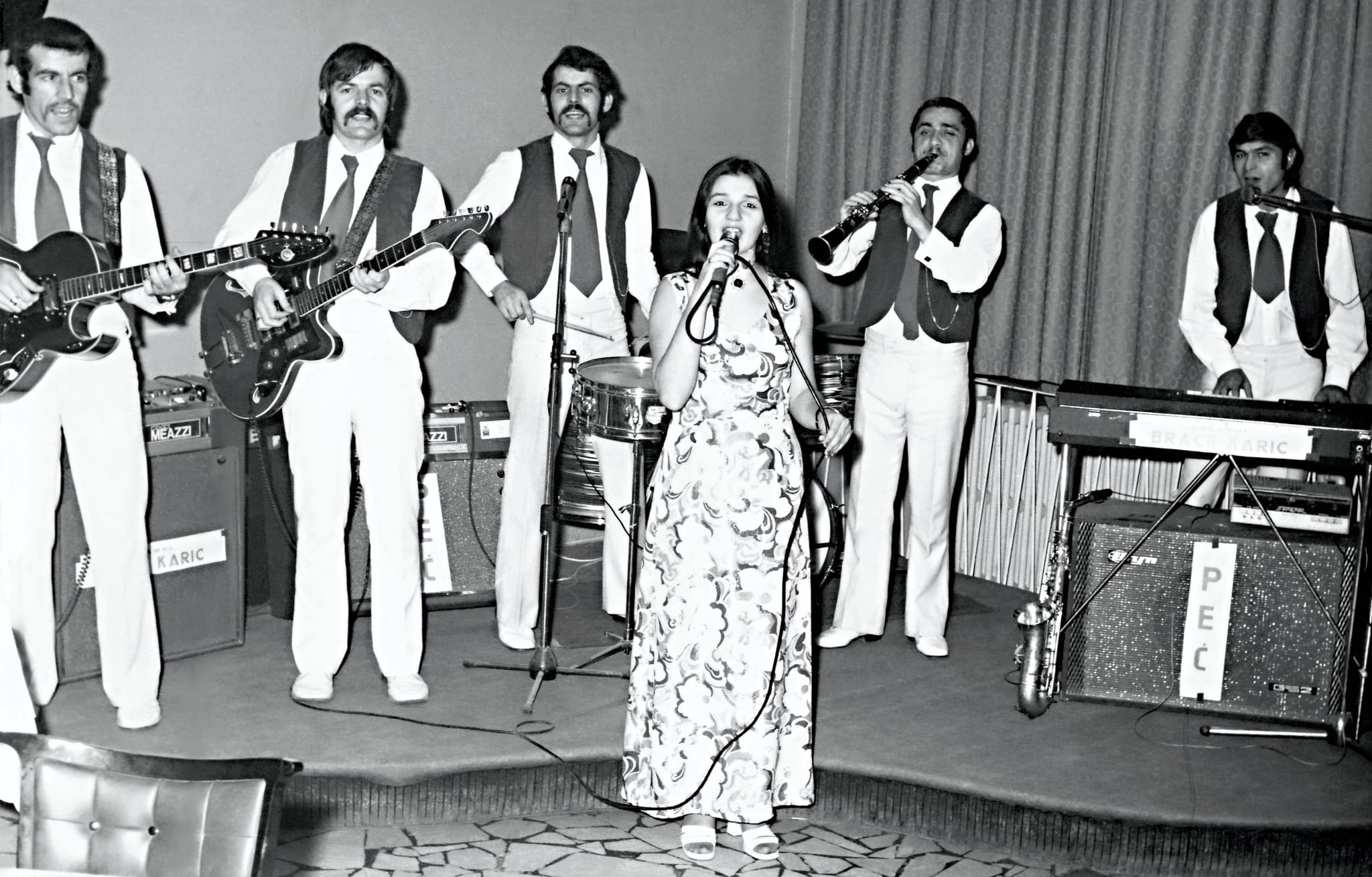
A singer with the Plave zvezde band on stage
Archive.
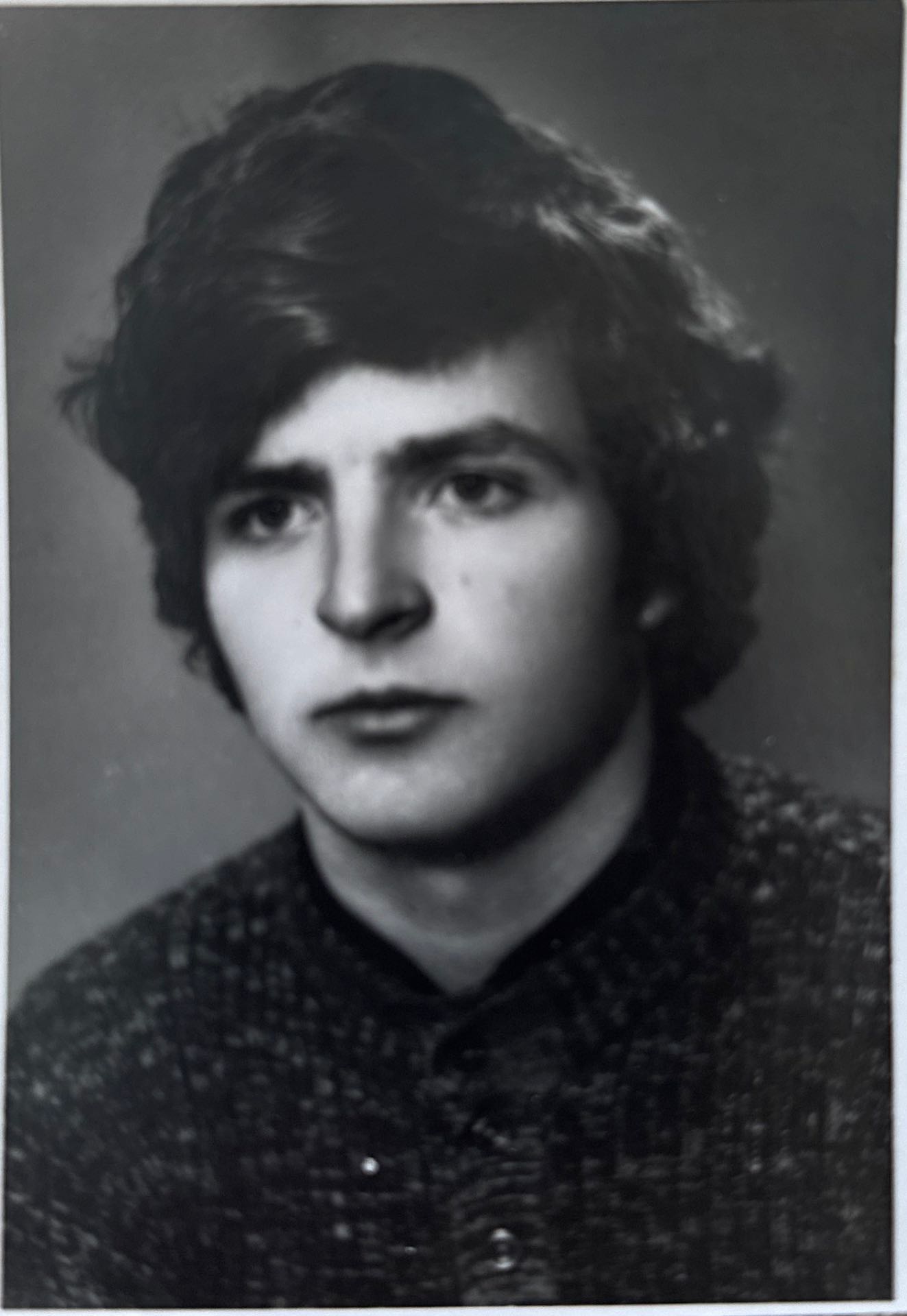
A portrait of the young Bogoljub Karić from 1971
Bogoljub Karić as a young man, 1971. The year is handwritten on the reverse.
03
From music to the first workshop

“Plave zvezde” and “Tehničar”

Before the workshop, there was “Plave zvezde.”

In the mid-1960s, the family formed a musical group in Peć that went on to perform across Yugoslavia. Bogoljub was its manager and organiser, occasionally played bass, and later took charge of booking performances as well. While his brothers played, he was already thinking about the audience, the journey, the agreement, and the next opportunity.

Danica Karić preserved a vivid memory of one engagement. The young musicians travelled by truck in the rain. They wore old clothes and carried their stage outfits separately to protect them. When the hotel director saw them arrive, he asked their manager what sort of musicians he had brought to the gala opening. They washed, changed, put on bow ties, and stepped onto the stage. According to Danica, the director could not believe they were the same young men. They played for three nights and earned good money.

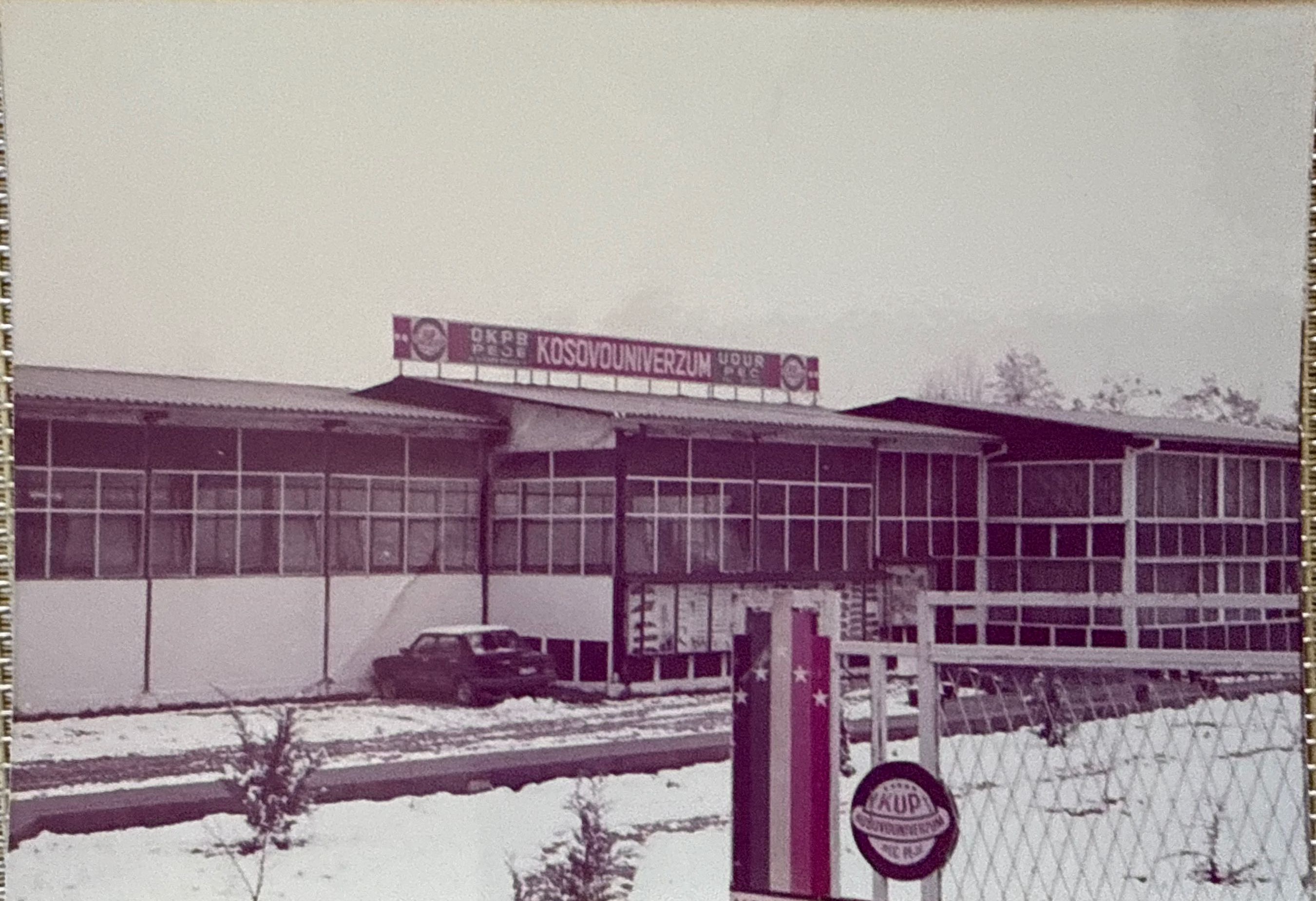
The money from music did not remain merely a memory of youth. The family invested savings from performances and their small trading ventures in the next venture. In the early 1970s, they opened “Tehničar,” a precision-mechanics repair shop for typewriters, photocopiers, and calculating machines. By the end of the decade, “Kosovouniverzum” had begun production.

They started in a 32-square-metre garage with two second-hand lathes and one screen-printing machine. They took on jobs that large factories did not want—from screen printing, badges, and road signs to small tools and spare parts.

Those early days established an approach he would return to throughout his life: start with what you have, learn quickly and reinvest your earnings to take the next step.

Video archive

All recordings in the video archive →
Innovation as a way of life

Recognising what others do not yet see.

It is not about one year or one company. It is the habit of recognising what is yet to come.

The Kosovouniverzum factory building in Peć
The Kosovouniverzum factory in Peć. Family archive.
04
Innovation as a way of life

Seeing the future before it becomes commonplace

Bogoljub was not drawn to new ideas simply because they were new. He was drawn to what people lacked but did not yet know they would soon need.

At one trade fair, he noticed that no small plough was being offered. Within sixty days, they had built their own model; orders then arrived from across the country. While others looked at what already existed, he searched for a gap that could be turned into a product.

The same pattern recurred on a much larger scale. Karić Banka was the first private bank in what was then Yugoslavia; “Evropa Osiguranje” was the first private insurance company in socialist Yugoslavia; and Karić Brothers University was Serbia’s first private university. Mobtel launched Serbia’s first mobile network.

BK Television soon became a widely watched private television channel and brought together many prominent journalists and television professionals. EUnet was among Yugoslavia’s first commercial internet service providers.

Bogoljub once summed up his position in these words: “I was a capitalist under communism, a capitalist under socialism, and I am a capitalist today.” Behind that statement was more than a desire to be first: it reflected a willingness to invest in something before the need for it became obvious to everyone else.

His most important innovation, then, is not any single company or device, but the habit of looking several steps beyond the present—towards what everyone will regard as normal tomorrow.

Video archive

All recordings in the video archive →
To rise from the ashes once again.
The strength to start again after adversity.
Bogoljub Karić kneeling beside his mother, Danica, and kissing her hand after returning to Serbia PHOTOGRAPH: MILENA ĐORĐEVIĆ / TELEGRAF.
Return to Serbia, Nikola Tesla Airport, 30 December 2016. Photo: Milena Đorđević / Telegraf. Source.
05
The strength of a new beginning

Beginning again

A long life’s journey is not made up of successes alone. It also contains moments when a person must begin again.

Bogoljub spent more than a decade outside Serbia. The family already had extensive business experience in Eastern Europe, yet for him this was still a new beginning. In a later conversation, he distilled his decision at the time into a single thought: he set himself the goal of “rising from the ashes once again.”

He did not stop working. Together with his family and associates, he continued developing businesses and major construction projects in Russia and Belarus. Into that new beginning he carried his knowledge, his energy for work, and his ability to bring people together around an idea once more.

The most powerful image from that chapter is not a business one. As he later recalled, he asked that no one wait for him at the airport. His family came anyway. When he saw his mother, Danica, upon his return, he knelt before her and, as he told it, she embraced him like a child.

For him, beginning again does not mean erasing what happened. It means refusing to let loss decide how much future a person has left. It is the ability to create again after adversity.

Bogoljub Karić with Salonika Front veterans, a photograph from the Karić Foundation archive
Bogoljub Karić with Salonika Front veterans. Source: Karić Foundation.
A family value

Humanitarian work that endures.

Ways of helping may change, but care remains with a particular person for as long as it is needed.

06
When help reaches the person who needs it

Humanitarian work

The first lesson in helping others came not from a foundation, but from the family home in Peć.

Bogoljub later wrote that when postwar Red Cross aid reached Peć, his father Janićije distributed food, clothing, and shoes to neighbours. Although the Karić family was also on the list, he would say that others needed the help more. The family book further records that Janićije was chairman of the district Red Cross and adhered strictly to the lists of beneficiaries.

That same family conviction gave rise to the Social Council at the factory in Peć, whose work was led by Milanka, Hafa, Marjana, Slavica, and Olivera. From it grew the Karić Brothers Foundation—the first private humanitarian foundation in Serbia after the Second World War—which gave personal care an enduring, organised form.

From Janićije’s lesson, through the women who organised that work, to the new generations continuing it, the ways of helping have changed, but not their purpose: to reach a particular person and remain for as long as needed.

Among the strongest examples of that commitment were lifetime monthly pensions for surviving Serbian veterans of the Salonika Front. An archival photograph of Bogoljub with veterans of the Salonika Front preserves precisely that moment of human connection.

For the Karić family, helping others has never been a one-day campaign. It is a family duty that each generation accepts, gives a new form, and keeps close to the people who need it. One conviction lives within that continuity: “Family is the safest place.” For Bogoljub, success acquires its full value only when it is shared.

Bogoljub Karić during an interview
Bogoljub Karić during a conversation.
07
A path that remains open

There is still much more to create

After more than half a century of work, Bogoljub still speaks about what remains to be built.

In an interview preserved in the family archive, he put it this way: “I see no point in earning more; I am inspired by creating.” For him, this is what every form of creative work—art, science, and business—has in common: when a person is truly devoted to it, there is always a new challenge ahead.

In his reflections today, he repeatedly returns to young people, education, family businesses, production, and new technologies, as well as to the idea of Serbia as a centre of knowledge and innovation.

In his paper “Diagnosis of Humanity,” he extends that thought from the individual to the entire world. Humanity’s technological power, he writes, has grown faster than human consciousness, ethical maturity, and collective responsibility. It is therefore not enough to ask what we can create. We must also ask what kind of people we are becoming as we create.

From that conviction come his ideas about bridges instead of barriers, peace built as a system, education as the greatest source of strength, and technology that must serve people and human dignity. On this personal website, these ideas belong to his worldview, not to a political programme.

The final story therefore does not close the biography. It leaves the door open for a man who measures the years not only by what he has completed, but also by the number of ideas he still wants to set in motion. As long as a person keeps creating and sharing knowledge with others, the journey continues.

The essence of all seven stories

Faith. Family. Building a Legacy.

01

Faith

A foundation he carried from Peć and the Patriarchate of Peć and passed on to his children and grandchildren.

02

Family

The safest place, the first school of trust, and a source of strength for every new beginning.

03

Building a Legacy

A way to turn knowledge into the future and ensure that what is created serves people.